
Inequity in home ownership
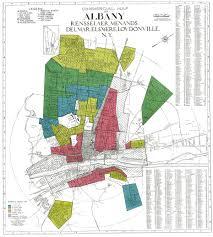
While we don’t presume to have the expertise to thoroughly discuss the causes and solutions to the racial inequity that exists in home ownership, with the current (and needed) focus on the institutional racism that permeates our society, we felt it important to share some statistics for your consideration.
For most of us, our home is our most valuable asset. Home ownership allows us to grow our wealth in a way that no other purchase does. As cited in a recent Washington Post article, in 2019 white median household wealth was $139,300 as compared to $12,780 for black households. In looking at housing statistics, one sees a discrepancy between the home ownership experience for white and black Americans. According to the US Census, 76% of white non-hispanics are home owners as contrasted with 47% of black households. This gap is wider in cities and in the Northeast and Mid-West. According to a 2018 Urban Institute report, Albany NY has the dubious distinction of having the largest gap with 69% of white residents owning homes compared to 20% of black residents.
While we don’t presume to have the expertise to thoroughly discuss the causes and solutions to the racial inequity that exists in home ownership, with the current (and needed) focus on the institutional racism that permeates our society, we felt it important to share some statistics for your consideration.
For most of us, our home is our most valuable asset. Home ownership allows us to grow our wealth in a way that no other purchase does. As cited in a recent Washington Post article, in 2019 white median household wealth was $139,300 as compared to $12,780 for black households. In looking at housing statistics, one sees a discrepancy between the home ownership experience for white and black Americans. According to the US Census, 76% of white non-hispanics are home owners as contrasted with 47% of black households. This gap is wider in cities and in the Northeast and Mid-West. According to a 2018 Urban Institute report, Albany NY has the dubious distinction of having the largest gap with 69% of white residents owning homes compared to 20% of black residents.
The home ownership gap between whites and blacks is bigger now than it was in 1934, according to the Washington Post. You have likely heard of the term red-lining, which was a government sanctioned practice whereby mortgage lenders mapped perceived credit risk by neighborhood. While outlawed in the 1960s, that practice continues to impact the value of homes in previously red-lined communities, resulting in their values being approximately 50% lower than homes in green-lined communities. The recession and housing crisis of 2008 hit previously red-lined neighborhoods harder due to black borrowers being targeted for the sub-prime loans that precipitated the crisis. According to Urban.org, “If the black homeownership rate was the same today as it was in 2000, America would have 770,000 additional black homeowners.” Formerly red-lined communities have schools that are ranked lower than green-lined communities and lack the commercial development and investment that other neighborhoods benefit from. This perpetuates a pernicious cycle whereby lower quality schools/education gap limit college/job opportunities for residents of these neighborhoods and thus limiting their income potential and ability to purchase a home in the future.
Blacks borrowers are more likely to be denied a mortgage as well as the opportunity to refinance an existing loan. The New York Time recently published an article, describing how black home owners face discrimination in appraisals done on their properties. Adding to the inequality, white young adults are more likely to benefit from assistance from relatives - 32% of all first time buyers get a gift or loan from a personal connection versus 21% of blacks.
It’s easy to say that personal responsibility and hard work explain home ownership rates, however the statistics belie that given that white high school drop outs have a higher home ownership rate (60.5%) than black college graduates (56.4%).
We are continuing to seek out additional resources to educate ourselves on this issue and we encourage you to do the same. Please let us know if you come across any particularly compelling articles or books on the subject.